
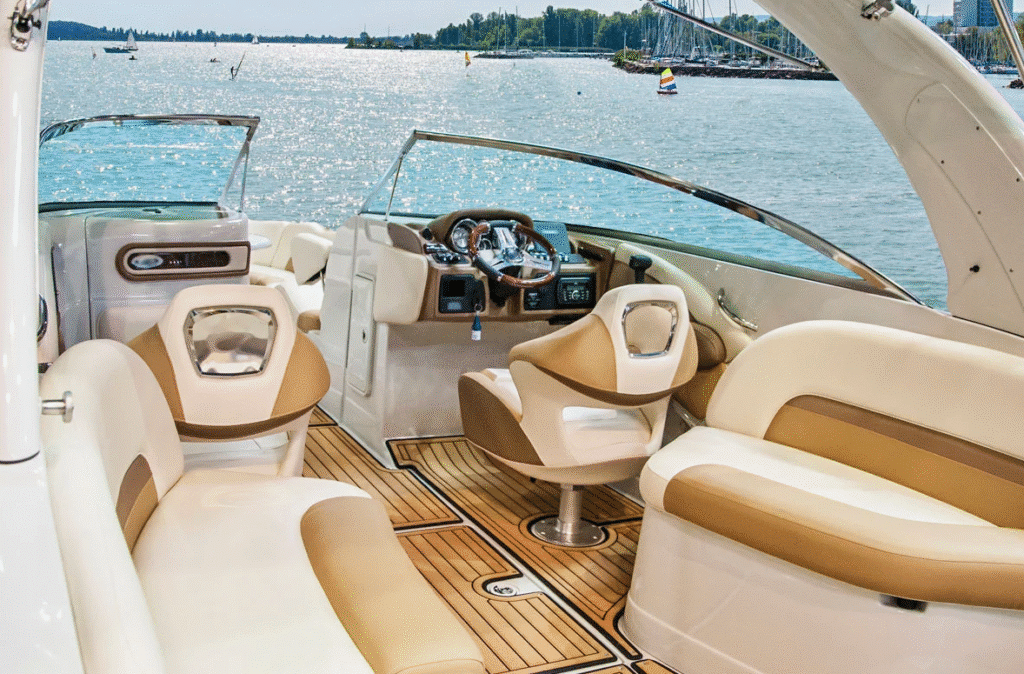
Upholstery boat seats start with the right material choice
When boat owners talk about comfort, they often focus on seat shape or foam density. In reality, the surface material plays an equally important role. Upholstery boat seats face constant UV exposure, moisture, salt, and temperature changes. For those looking for professional solutions, for upholstery boat seats services tailored to your boat and usage conditions, you can visit this marine upholstery service to explore material options built for marine environments.
Unlike indoor or automotive upholstery, marine seat coverings must perform under stress every single day. That is why material selection should never be based on appearance alone.
Marine grade vinyl as the industry standard
Marine grade vinyl remains the most common material for upholstery boat seats across the US market. Its popularity comes from a balance of durability, flexibility, and cost.
High quality marine vinyl is engineered to resist UV damage, surface cracking, and color fading. It also includes protective coatings that reduce moisture absorption, which helps prevent mold growth beneath the surface.
Not all vinyl qualifies as marine grade. Lower quality options may look similar but often lack proper UV stabilizers and tear resistance, leading to premature failure.
Fabric backed vinyl and structural stability
One overlooked aspect of upholstery boat seats is the backing layer. Fabric backed vinyl provides added structural support and prevents stretching over time.
This backing helps seats maintain their original shape, especially in high traffic areas like helm seats and cockpit benches. Without proper backing, vinyl can sag, wrinkle, or pull away from seams under regular use.
For boats used frequently or commercially, reinforced backing becomes especially important for long term performance.
Breathable materials and heat management
Heat buildup remains a common complaint among boat owners in warmer climates. Standard vinyl can become uncomfortably hot under direct sunlight.
Some modern upholstery boat seats use advanced vinyl blends designed to reflect heat or improve airflow. These materials reduce surface temperature and improve comfort during long days on the water.
While breathable marine fabrics exist, they require careful selection and proper installation. Poor drainage design can trap moisture and shorten lifespan if materials are mismatched.
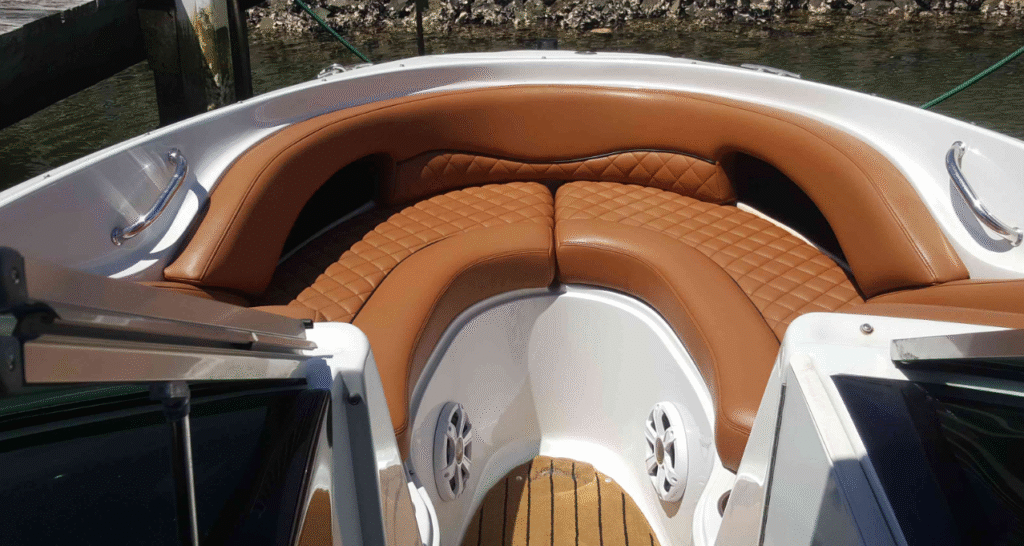
Stitching materials matter as much as fabric
Even the best upholstery material fails if stitching breaks down. Marine grade thread resists UV exposure far better than standard thread used in non marine applications.
Polyester and PTFE threads are commonly used in upholstery boat seats due to their resistance to sun damage and moisture. Thread choice directly affects seam strength, especially around corners and high load areas.
Weak stitching often becomes the first point of failure, even when the upholstery surface remains intact.
Foam compatibility with upholstery materials
Upholstery boat seats rely on proper interaction between foam and surface material. Closed cell or high density marine foam resists water absorption and maintains support longer.
If upholstery materials trap moisture against low quality foam, internal breakdown accelerates. This leads to soft spots, unpleasant odors, and shortened seat lifespan.
Good upholstery design allows moisture to escape while keeping surface materials tight and supportive.
Color stability and long term appearance
Color fading is one of the most visible signs of upholstery aging. Dark colors absorb more heat, while lighter tones may show stains more easily.
Modern upholstery boat seats materials include color fast pigments designed to withstand extended UV exposure. This helps interiors maintain a clean, consistent appearance over multiple seasons.
Choosing proven marine colors rather than trendy shades often results in better long term satisfaction.
Environmental exposure and regional considerations
Boat upholstery performs differently depending on location. Saltwater exposure in coastal areas places different demands on materials than freshwater lakes.
In southern states, constant sun exposure becomes the main threat. In northern regions, freeze and thaw cycles test material flexibility. Upholstery boat seats must remain supple without cracking under temperature shifts.
Selecting materials rated for regional conditions reduces maintenance issues and unexpected repairs.
When material upgrades make sense
Many owners choose to upgrade upholstery materials during restoration or refit projects. This allows them to correct weaknesses in original factory selections.
Upgrading upholstery boat seats materials can improve comfort, reduce maintenance, and extend service life without changing seat layout. It also improves resale appeal by signaling quality and care.
Material upgrades often provide better value than frequent minor repairs.
Final thoughts on upholstery boat seats materials
Upholstery boat seats succeed or fail based on material quality. The right vinyl, proper backing, durable stitching, and compatible foam work together as a system.
Understanding how materials behave in real marine conditions helps owners make smarter decisions. With the right choices, boat interiors stay comfortable, attractive, and reliable season after season.
If you want more articles on marine interiors, materials, and practical boating topics, you can explore them here.