
Boat seat materials play an important role in creating a comfortable and visually appealing marine interior. When combined with carefully selected leather finishes, decorative stitching, and custom upholstery details, they can give a boat a more refined and luxurious atmosphere. Although leather is commonly associated with cars and premium furniture, it can also influence modern marine design when the right materials are selected for each area. Boat owners planning an interior upgrade can consult specialists such as Boat Upholstery Fort Lauderdale to explore suitable upholstery combinations and custom seating solutions.
Why Leather Remains a Popular Interior Finish
Leather offers a distinctive combination of texture, visual depth, and comfort. Its natural grain gives each surface individual character, while different finishes allow designers to create anything from a classic appearance to a clean, contemporary interior.
In residential and automotive projects, genuine leather is valued for its ability to develop a natural patina over time. However, marine applications require additional consideration. Constant sunlight, humidity, splashes, and temperature changes can affect upholstery, so ordinary furniture leather is not automatically suitable for exposed boat seating.
That is why boat seat materials should be selected according to their intended location. Genuine leather may be appropriate for certain protected interior areas, while marine-grade vinyl and specialized synthetic materials can provide a more practical solution for exterior seats.
Combining Leather Details With Marine Upholstery
A refined boat interior does not necessarily need to use one material everywhere. Designers can combine different surfaces to achieve a balanced appearance without sacrificing practicality.
For example, a cabin may feature leather-covered decorative panels, upholstered armrests, and contrasting seat inserts. Exterior seating can use marine-grade coverings that resemble leather while offering properties better suited to outdoor exposure.
This approach creates visual continuity between the cabin and cockpit. Matching colors, stitching patterns, and textures can make different areas feel like parts of one carefully designed interior.
When comparing boat seat materials, owners should consider how each surface interacts with the others. A textured insert may complement smooth upholstery, while contrast stitching can highlight the shape of a seat without making the design overly complicated.
Choosing the Right Type of Leather
Not all leather has the same characteristics. Full-aniline leather retains much of its natural surface appearance and offers a soft, distinctive feel. However, it is more sensitive to staining and environmental exposure. Semi-aniline leather includes a light protective finish, providing a balance between natural texture and additional resistance.
Pigmented leather has a more substantial surface coating that creates a consistent appearance and generally makes routine cleaning easier. Its protective finish can be useful in frequently used interior spaces, although the exact performance depends on the product and its construction.
For boat interiors, the material specification matters more than the name alone. Owners should ask about the intended application, cleaning requirements, resistance to sunlight, and manufacturer recommendations before selecting a finish.
The same principle applies when choosing boat seat materials for areas exposed to moisture or direct sunlight. A decorative leather finish may look impressive inside a protected cabin but may not be the best choice for an uncovered cockpit.
Craftsmanship Makes the Difference
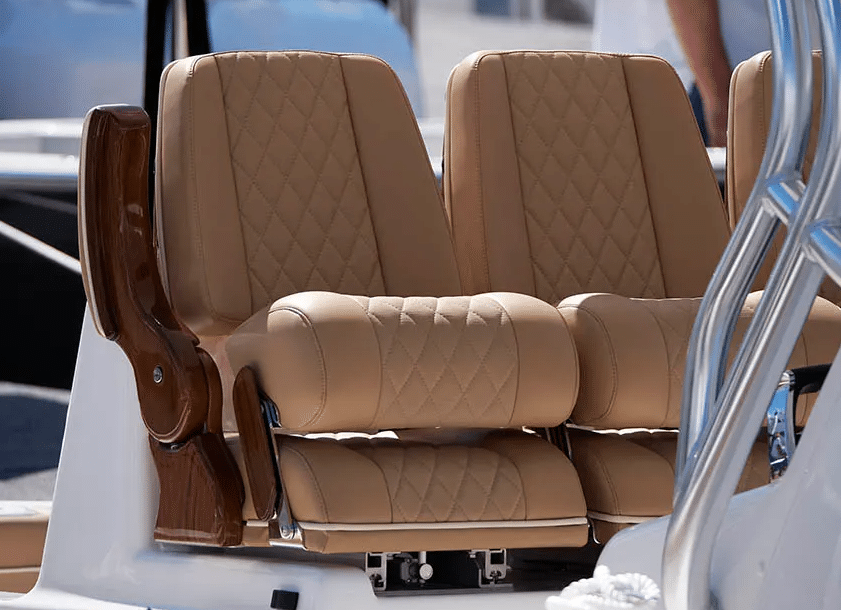
High-quality upholstery depends on accurate measurements and careful installation. Even premium materials can produce a disappointing result when patterns are poorly aligned or seams are incorrectly positioned.
Custom upholstery work requires attention to several details:
- Accurate measurements of seat frames and existing panels.
- Consistent stitching and carefully finished edges.
- Appropriate foam thickness and cushion support.
- Clean transitions between leather and alternative upholstery.
- Secure installation that follows the original seating structure.
These details influence both appearance and everyday usability. Well-finished seams create a cleaner visual result, while properly fitted covers reduce unwanted folds and movement during use.
For custom marine interiors, boat seat materials should also be considered alongside the foam, backing, and construction methods. A coordinated approach helps prevent the finished seating from looking disconnected or uneven.
Maintaining Leather and Leather-Look Surfaces
Leather requires care that matches its specific finish. Regular dust removal and gentle cleaning can help prevent dirt from accumulating in the grain. Spills should be addressed promptly, and owners should avoid aggressive household cleaners that may damage protective coatings.
It is also important to distinguish genuine leather from synthetic alternatives. Some coated surfaces need only a gentle wipe, while natural leather may require products specifically formulated for its finish. Testing any cleaner in a discreet area is a sensible precaution.
For marine interiors, moisture control and ventilation are equally important. Keeping cushions dry and protecting vulnerable surfaces from prolonged direct sunlight can help preserve their appearance.
A well-planned maintenance routine also benefits surrounding upholstery. Whether an interior combines natural leather, vinyl, or other boat seat materials, following the manufacturer’s instructions helps avoid unnecessary wear.
Creating a Cohesive and Comfortable Marine Interior
A luxury interior is not defined by expensive materials alone. It comes from the way textures, colors, seating shapes, and decorative details work together. Leather accents can introduce warmth and sophistication, while practical marine upholstery protects the areas that face the greatest exposure.
Before beginning a renovation, owners should identify which surfaces need a premium finish and which require stronger resistance to moisture, sunlight, and frequent cleaning. This makes it easier to choose appropriate materials without compromising the overall design.
The best boat seat materials support the boat’s intended use while complementing its interior style. With thoughtful planning and skilled upholstery work, a vessel can gain a more refined atmosphere without losing the practical qualities required for life on the water.
For more articles about boating, marine design, and boat maintenance, you can explore additional resources here.